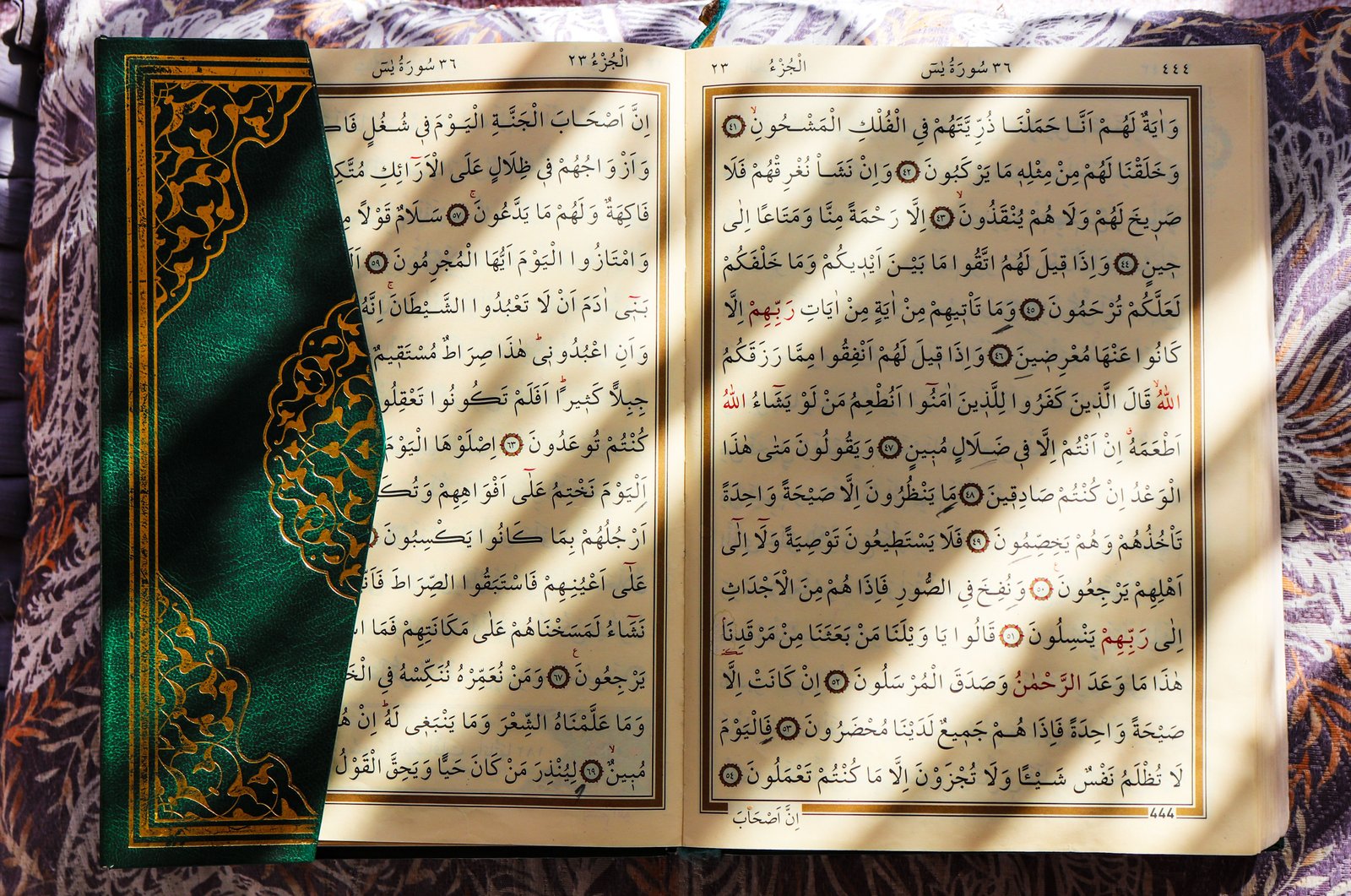
Adults who do not speak Arabic can learn to read the Quran in roughly 3 to 9 months of consistent study. The path has three steps: learn the Arabic letters and their sounds, learn the vowel marks that turn letters into syllables, then read short surahs with a teacher who corrects your pronunciation aloud. Understanding Arabic is a separate skill and is not required to begin.
· Reviewed by the Azhareon Academic Committee, Al-Azhar University graduate
First, the thing nobody tells you
Many adults who come to us have been carrying the same quiet assumption for years: that reading the Quran is something you either learned as a child or missed forever. That is not true, and it is worth saying plainly.
Reading the Quran is a decoding skill, like learning to read music. It has a fixed alphabet, fixed vowel marks, and fixed rules. It is finite. Adults have one real disadvantage — the muscles of the mouth are less flexible than a child's, so certain sounds take longer to produce. But adults have three advantages that usually outweigh it: they understand explanations, they can self-correct, and they chose to be there.
We have taught adults who started at 22 and adults who started at 61. The pattern is the same.
Step 1 — The Arabic letters and their sounds (2 to 6 weeks)
Arabic has 28 letters. Around 20 of them have a rough English equivalent. The remaining 8 or so are the ones that need real work, because they are produced from parts of the throat that English never uses:
| Letter | Why it is difficult |
|---|---|
| ع (ayn) | Produced from the middle of the throat; no English equivalent at all |
| ح (ḥa) | A breathy sound from the throat, not the English "h" |
| غ (ghayn) | Close to a French "r", produced at the top of the throat |
| ق (qaf) | A "k" made far back against the soft palate |
| ص ض ط ظ | "Heavy" letters — the tongue flattens and the sound thickens |
Two points matter here. First, you learn letters by sound, not by name — knowing the letter is called "ṣād" is useless if you cannot produce it. Second, you cannot learn these from an app. An app cannot hear you. Every adult we have taught who tried apps alone arrived with pronunciation habits that took longer to unlearn than to have learned correctly.
Step 2 — Vowels and joining (4 to 10 weeks)
Arabic letters carry small marks above and below them that tell you which vowel follows. This is the stage where isolated letters become readable words:
- Fatḥah, kasrah, ḍammah — the three short vowels (a, i, u)
- Tanween — doubled vowel marks at the end of a word, adding an "n" sound
- Sukoon — a letter with no vowel, closing a syllable
- Shaddah — a doubled letter, held longer
- Madd — long vowels, stretched to a measured length
- Letter forms — each letter changes shape depending on whether it stands alone, begins, sits in the middle, or ends a word
That last point catches almost everyone. A letter you learned in isolation looks different inside a word. This is why structured material matters: the traditional primer used for this stage, Noorani Qaida, introduces the forms in a deliberate order rather than dropping them on you at once.
By the end of this stage you can sound out any Arabic word in the Mushaf, slowly. You will not understand it. That is expected and it is not a problem.
Step 3 — Reading the Mushaf (3 to 6 months)
Now you open the Quran itself. Almost every teacher starts you at the back, with Juz Amma — the thirtieth part — because the surahs there are short, the vocabulary repeats, and many of them are ones you already hear in prayer.
The work at this stage is simple and unglamorous: read aloud, get corrected, read again. Progress is measured in fluency — how far you can read without stopping, and how few corrections your teacher makes.
A realistic target: reading Surah Al-Fatihah correctly and confidently within 8 to 12 weeks of starting from zero. That single surah is what you recite in every unit of every prayer, so it is where most adults want to arrive first.
Step 4 — Tajweed (ongoing, starts after fluency)
Tajweed is the set of rules governing how the Quran is recited: how long to hold an elongation, when a letter is nasalised, when it is merged into the next, where you may stop and where you may not.
Here is the mistake to avoid: do not start Tajweed until you can read fluently. Applying rules to text you are still decoding letter by letter overloads you and slows both skills. Learn to read first. Then refine.
Do I need to understand Arabic?
No — and this surprises many people. The majority of Muslims worldwide, including in Turkey, Pakistan, Indonesia, Nigeria and Britain, recite the Quran without speaking Arabic. Reading and understanding are two separate skills with two separate paths.
That said, most adults eventually want both. The natural order is:
- Learn to read the script (3 to 9 months)
- Read with a translation alongside, to connect sound to meaning
- Learn the ~300 words that make up a large share of Quranic vocabulary
- If you want to go further, study Classical Arabic grammar properly
Step 3 gives you disproportionate return. A relatively small vocabulary covers a surprisingly large portion of the text, because Quranic language repeats heavily.
Five mistakes adult beginners make
- Learning alone from apps and videos. They cannot hear you. Pronunciation errors set fast and are painful to undo.
- Starting with memorisation. Memorising before you can read means memorising sounds you cannot verify. Read first.
- Using transliteration. Romanised text ("Bismillahir rahmanir raheem") feels like a shortcut and is a trap. It cannot represent Arabic sounds accurately and it delays the moment you learn to read the actual script.
- Comparing yourself to children. A seven-year-old absorbs sounds faster. You process explanations faster. Different tools, same destination.
- Studying in long, rare sessions. Twenty minutes daily beats two hours on a Sunday. Recitation is a physical skill and physical skills need frequency.
A realistic weekly schedule for a working adult
| When | What | How long |
|---|---|---|
| Two evenings a week | Live lesson with a teacher | 30 minutes each |
| Every other day | Practise the last lesson aloud | 15 minutes |
| Daily | Listen to a reciter for the surah you are on | 5 minutes |
That is around two and a half hours a week. Sustained for six months, it is more than enough to take an adult from nothing to reading the Mushaf.
Learning with Azhariyoun Academy
Our teachers are graduates of Al-Azhar University in Cairo, and the ones who teach adult beginners are selected specifically for their ability to explain in clear English. That combination matters more than people expect: a teacher can have a beautiful recitation and still be unable to explain to a British adult why their "ع" is coming out as a vowel.
- One-to-one lessons — you are never in a group with children
- Adult-only classes, taught without any assumption of prior knowledge
- Female teachers available for women
- Evening and weekend slots in UK and European time zones
- A free trial lesson before you pay anything
If you are starting from absolute zero, say so when you book. It is the most common request we receive and there is nothing to be embarrassed about.
Frequently asked questions
Am I too old to learn to read the Quran?
No. Adults regularly learn to read the Quran in their thirties, forties, fifties and beyond. Adults progress more slowly on pronunciation than children but faster on understanding rules and structure, so overall timelines are broadly similar — often 3 to 9 months to read the script.
How long does it take an adult to learn to read the Quran?
With two lessons a week and short daily practice, most adults complete the Arabic reading foundation in 3 to 6 months and can read Juz Amma with reasonable fluency within 9 to 12 months of starting.
Can I learn the Quran without learning Arabic?
Yes. Reading and reciting the Quran is a decoding skill separate from understanding Arabic. Most Muslims worldwide recite the Quran without speaking Arabic. Understanding the meaning is a later, optional stage that begins with reading translations alongside the text.
Should I learn from an app or a teacher?
Apps are useful for revision and letter recognition, but they cannot hear you. Pronunciation errors in Arabic — particularly with the throat letters — become permanent habits if they are not corrected aloud by a teacher in the first weeks.
What is the first thing I should learn?
The 28 Arabic letters and their correct sounds, learned by hearing and repeating with a teacher, not by memorising their names. Once the sounds are accurate, you learn the vowel marks that combine them into syllables.
I recently became Muslim. Where do I start?
Start with the Arabic letters, and in parallel learn Surah Al-Fatihah by listening and repeating, since you need it for prayer immediately. Most new Muslims can recite Al-Fatihah correctly within a few weeks while continuing to learn the script properly alongside.
Related reading
- Noorani Qaida Online: The Complete Beginner's Guide
- Online Quran Classes in the UK: A Parent's Guide
- Learning the Quran for Non-Arabic Speakers
Frequently Asked Questions
Am I too old to learn to read the Quran?
No. Adults regularly learn to read the Quran in their thirties, forties, fifties and beyond. Adults progress more slowly on pronunciation than children but faster on understanding rules, so overall timelines are similar — often 3 to 9 months to read the script.
How long does it take an adult to learn to read the Quran?
With two lessons a week and short daily practice, most adults complete the Arabic reading foundation in 3 to 6 months and can read Juz Amma with reasonable fluency within 9 to 12 months.
Can I learn the Quran without learning Arabic?
Yes. Reading and reciting the Quran is a decoding skill separate from understanding Arabic. Most Muslims worldwide recite the Quran without speaking Arabic.
Should I learn the Quran from an app or a teacher?
Apps are useful for revision and letter recognition but cannot hear you. Pronunciation errors, particularly with Arabic throat letters, become permanent habits if not corrected aloud by a teacher in the first weeks.
What should I learn first when starting the Quran?
The 28 Arabic letters and their correct sounds, learned by hearing and repeating with a teacher rather than memorising their names. Then the vowel marks that combine them into syllables.