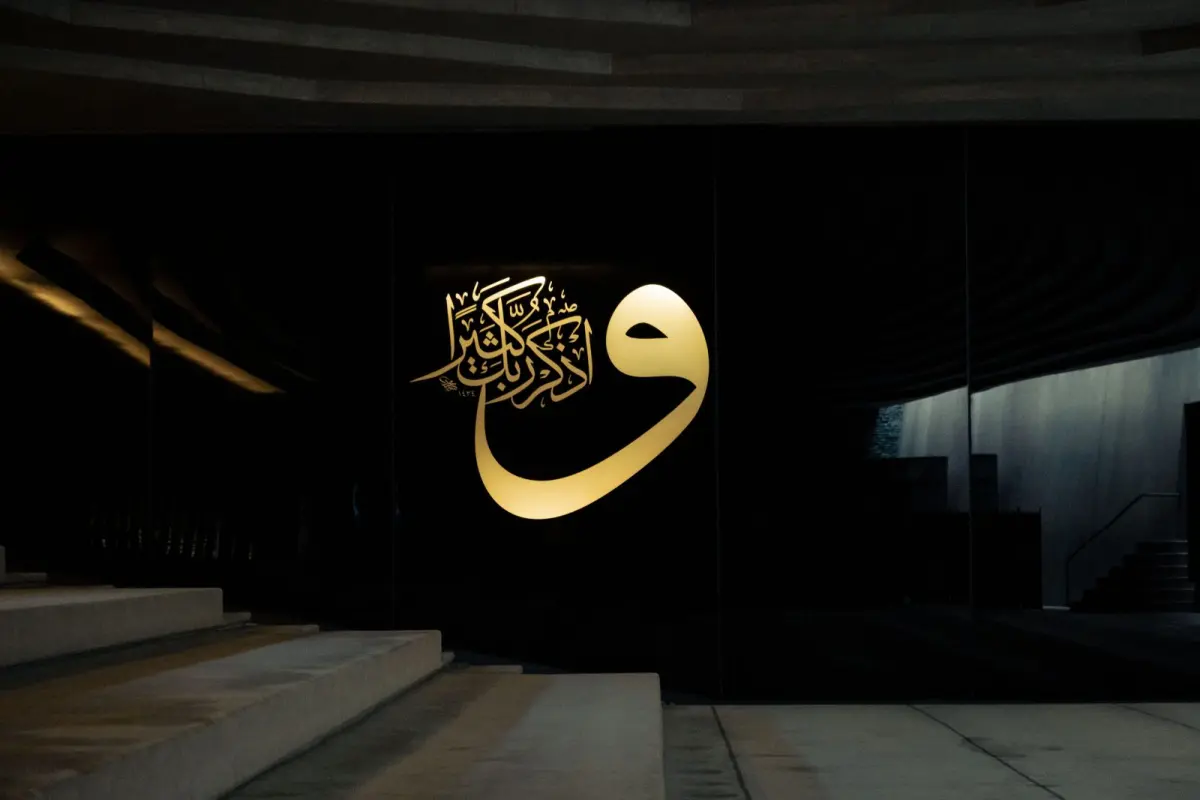
Noorani Qaida is the traditional Arabic reading primer used to prepare students to read the Quran. It teaches the 28 Arabic letters, their correct pronunciation points, vowel marks, joining, and the basic rules needed before Tajweed. A child taking two or three lessons a week typically finishes it in 4 to 9 months; an adult usually finishes in 3 to 6 months.
· Reviewed by the Azhareon Academic Committee, Al-Azhar University graduate
What is Noorani Qaida?
Noorani Qaida (also written Nurani Qaida, Noorani Qaidah, or simply "the Qaida") is a short instructional book — usually around 30 to 40 pages — that teaches a complete beginner how to read Arabic script so that they can then read the Quran.
It is attributed to Molvi Noor Muhammad Ludhianvi of the Indian subcontinent, and it became the standard beginner's text across South Asia. Through migration it travelled with families to Britain, and today it is used in almost every madrasah in London, Birmingham, Bradford and Leicester, as well as across South Africa, North America and increasingly in Europe.
Its value is not that it contains secret knowledge. Its value is sequence. The Qaida introduces one difficulty at a time, in an order that has been tested on millions of children, and it does not let you move on until the previous step is stable.
Is Noorani Qaida the same as an Arabic alphabet book?
No, and this distinction matters. An Arabic alphabet book teaches you the letters so you can learn the Arabic language. Noorani Qaida teaches you the letters so you can recite the Quran.
The difference shows in the emphasis. The Qaida spends significant time on makharij — the precise points in the mouth and throat from which each letter is produced — because that is what Quranic recitation requires. A general Arabic textbook will not bother. It also introduces the elongation and stopping conventions that appear in the Mushaf and nowhere in everyday Arabic writing.
What does Noorani Qaida cover, lesson by lesson?
| Stage | What is taught | Typical time |
|---|---|---|
| 1. Individual letters | All 28 letters in isolation, learned by sound and articulation point | 2–5 weeks |
| 2. Joined letters | How each letter changes shape at the beginning, middle and end of a word | 3–6 weeks |
| 3. Short vowels (harakat) | Fatḥah, kasrah, ḍammah — turning letters into syllables | 2–4 weeks |
| 4. Tanween | Doubled vowel marks that add an "n" sound at word endings | 1–2 weeks |
| 5. Long vowels (madd) | Alif, waw and ya as elongation letters, and how long to hold them | 2–4 weeks |
| 6. Sukoon | Vowel-less letters and how they close a syllable | 2–4 weeks |
| 7. Shaddah | Doubled letters, held and emphasised | 2–3 weeks |
| 8. Basic Tajweed rules | Qalqalah, basic noon saakinah rules, heavy and light letters | 4–8 weeks |
| 9. Reading practice | Short Quranic passages, applying everything learned | 3–6 weeks |
How long does Noorani Qaida take to finish?
This is the question every parent asks, and the honest answer depends on three variables: age, lesson frequency, and daily practice.
| Learner | Lessons per week | Typical completion |
|---|---|---|
| Child aged 5–7 | 2 × 30 min | 7–12 months |
| Child aged 5–7 | 3 × 30 min | 5–8 months |
| Child aged 8–12 | 3 × 30 min | 4–7 months |
| Teenager | 2–3 × 30 min | 3–6 months |
| Adult beginner | 2 × 30 min | 3–6 months |
Be cautious of any provider promising the Qaida in "30 days" or "8 weeks" for a young child. It happens occasionally with an exceptionally focused older student, but as a standard offer it usually means the student is being pushed through pages without the pronunciation being secured — which produces a child who has "finished the Qaida" and still cannot read the Mushaf.
The measure of completion is not reaching the last page. It is being able to open the Quran at a page you have never seen and read it aloud, slowly but correctly.
Why learn Noorani Qaida online rather than at the local madrasah?
The Qaida is a stage where individual correction matters more than at any other point in a student's Quranic education, because every pronunciation habit formed here is carried for life.
- One-to-one attention. In a masjid class of fifteen, a child might read aloud for two minutes. In a 30-minute online lesson, they read for most of it.
- Immediate correction. The teacher hears every letter and stops the moment a sound is wrong, rather than after a habit has set.
- Explanation in English. A British child understands "put the tip of your tongue against the roof of your mouth" far better than the same instruction in Arabic or Urdu.
- Repetition without embarrassment. Older beginners in particular are far more willing to repeat a sound twenty times when no one else is listening.
- No travel. Two evenings a week reclaimed from the car.
What comes after Noorani Qaida?
- Juz Amma. The student moves to the thirtieth part of the Quran, where the surahs are short and much of the vocabulary repeats. This is where fluency is built.
- Full Nazra. Reading through the entire Mushaf from Al-Fatihah onwards, building speed and confidence.
- Applied Tajweed. The complete rules — noon and meem saakinah, the categories of madd, the rules of stopping — studied properly and applied to live recitation.
- Hifz. Structured memorisation, if the family chooses it. This should not begin before Tajweed is stable.
Six signs a Qaida class is going well
- Your child reads aloud for most of the lesson, rather than listening to the teacher read
- The teacher stops and corrects individual letters, not just whole lines
- Each lesson begins by revising the previous one
- You receive some form of written progress note at least monthly
- Your child can produce ع and ح distinctly from ا and ه
- The pace is not driven by finishing the book
Learning Noorani Qaida with Azhariyoun Academy
Our teachers are graduates of Al-Azhar University in Cairo, trained in the articulation points of Arabic letters to a standard that goes well beyond what the Qaida itself requires. For beginners, that depth matters: a teacher who has studied makharij formally can tell you exactly which part of the throat your child is using incorrectly, rather than simply repeating the sound and hoping.
- One-to-one live lessons with a consistent named teacher
- Teaching and explanation in clear English
- Female teachers available for girls and adult women
- Evening slots aligned to UK and European time zones
- Monthly written progress reports
- A free trial lesson before you commit
Book a free Noorani Qaida trial lesson →
Frequently asked questions
How long does it take to finish Noorani Qaida?
A child aged 5 to 7 taking three lessons a week typically finishes in 5 to 8 months. An older child or teenager finishes in 3 to 7 months. An adult beginner taking two lessons a week usually finishes in 3 to 6 months. Completion means being able to read an unfamiliar page of the Mushaf correctly, not simply reaching the last page of the book.
At what age can a child start Noorani Qaida?
Most children are ready between ages 5 and 7, when they can sit for a focused 20 to 30 minutes. Children younger than 5 usually benefit more from listening and repeating short surahs orally before beginning formal reading work.
Can adults learn Noorani Qaida?
Yes, and it is the correct starting point for any adult who cannot read Arabic script, including new Muslims. Adults typically move faster than children through the reading stages but need more practice on the throat letters.
Is Noorani Qaida necessary before learning Tajweed?
Effectively yes. Tajweed rules govern how letters and syllables are recited, so a student who cannot yet decode letters and vowels reliably has nothing to apply the rules to. Attempting Tajweed first is the most common reason beginners stall.
Is Noorani Qaida the same as Qaida Baghdadi?
They are different primers with the same purpose. Qaida Baghdadi is older and more common in the Arab world and Turkey; Noorani Qaida is more structured, more gradual, and is the standard across South Asia and in most UK madrasahs. Either works, but Noorani Qaida is generally easier for a complete beginner.
Can Noorani Qaida be learned effectively online?
Yes. Because the Qaida is fundamentally about individual pronunciation correction, one-to-one online lessons often work better than group classes at a local madrasah, where a child may only read aloud for a couple of minutes per session.
Related reading
- Online Quran Classes in the UK: A Parent's Guide
- Learning to Read the Quran as an Adult Beginner
- The Best Age to Start Tajweed
Frequently Asked Questions
How long does it take to finish Noorani Qaida?
A child aged 5 to 7 taking three lessons a week typically finishes in 5 to 8 months. An older child or teenager finishes in 3 to 7 months. An adult beginner taking two lessons a week usually finishes in 3 to 6 months.
At what age can a child start Noorani Qaida?
Most children are ready between ages 5 and 7, when they can sit for a focused 20 to 30 minutes. Children younger than 5 usually benefit more from listening to and repeating short surahs orally before beginning formal reading work.
Can adults learn Noorani Qaida?
Yes. It is the correct starting point for any adult who cannot read Arabic script, including new Muslims. Adults typically move faster than children through the reading stages but need more practice on the throat letters.
Is Noorani Qaida necessary before learning Tajweed?
Effectively yes. Tajweed rules govern how letters and syllables are recited, so a student who cannot yet decode letters and vowels reliably has nothing to apply the rules to.
Is Noorani Qaida the same as Qaida Baghdadi?
They are different primers with the same purpose. Qaida Baghdadi is older and more common in the Arab world and Turkey; Noorani Qaida is more structured and gradual, and is the standard across South Asia and most UK madrasahs.
Can Noorani Qaida be learned effectively online?
Yes. Because the Qaida is fundamentally about individual pronunciation correction, one-to-one online lessons often work better than group classes where a child may only read aloud for a couple of minutes per session.