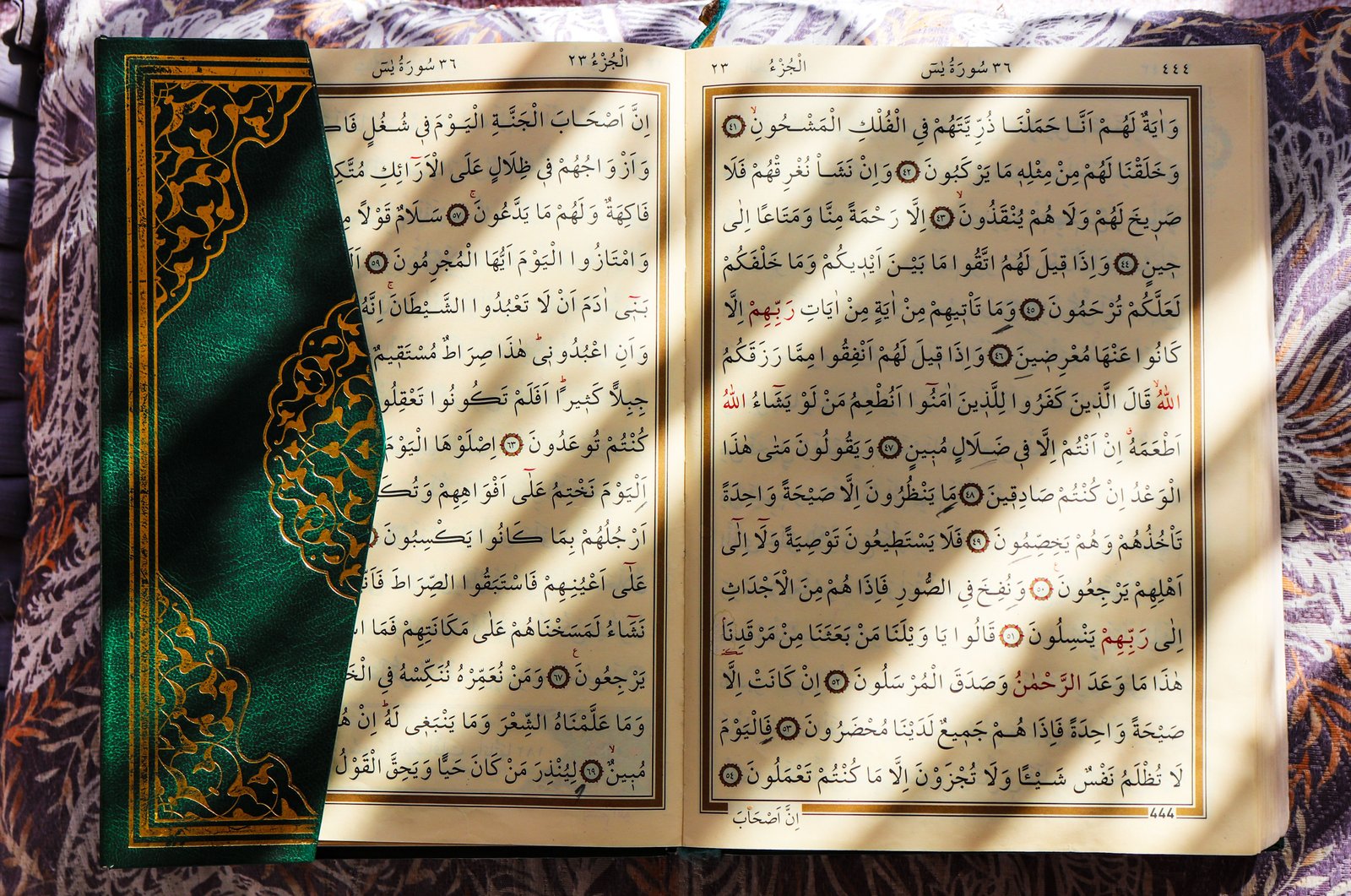
Someone who has recently embraced Islam in Europe faces a book in a language they do not know, surrounded by people who memorised it as children. And they ask a question they rarely dare voice at the mosque: “where do I actually begin?”
Here is the plan we recommend — tested with hundreds of adults, and deliberately shorter than what you will be offered elsewhere.
Month one: Al-Fatiha only
Not the full alphabet, not a memorisation schedule. Al-Fatiha alone, because it is obligatory in every unit of prayer — you will recite it seventeen times a day.
It is learned by listening and repetition with pronunciation correction. And since it contains most of the difficult Arabic sounds, whoever masters it has already covered the essentials without noticing.
Month two: the letters by their sound
Only now do we open the Qaida Nuraniyya. The order is deliberate: you learn the letters already knowing why, because you pronounce sounds daily that you will recognise.
Month three: three short surahs
Al-Ikhlas, Al-Falaq and An-Nas. They are the shortest in the Quran, they let you vary your prayer, and they give the first real sense of progress.
What to postpone without regret
Detailed tajweed rules, memorising long surahs, and Arabic grammar. All of that comes after a year. Reaching for it too early is by far the leading cause of people giving up.
Should I read the translation?
Yes, in your own language and from day one. The translation gives meaning, the recitation gives the text: two different, complementary things. Their combination is exactly what sustains motivation while Arabic reading is still slow.
And the embarrassment of knowing nothing?
It is almost universal among new Muslims, and it disappears in one-to-one lessons: nobody else listens, nobody compares, and a question asked ten times gets ten answers.